Featured Post

Your Life Is a Poem

In the new episode of ON BEING, " Your Life Is a Poem ," poet Naomi Shihab Nye talks about growing up in Ferguson, Missouri and o...

Showing posts with label workshop. Show all posts

Sunday, February 21, 2016

The Art of Poetry Free Online Course

Boston University and edX is offering a free, six-week, online poetry course (a MOOC - Massive Open Online Course) taught by Robert Pinsky, Duy Doan, Laura Marris, Calvin Olsen and Tomas Unger.

The course launches March 29, 2016. The class covers a wide range of material, from classics to work by contemporary poets. According to Pinsky, �this course is based on the conviction that the more you know about an art, the more pleasure you will find in it.�


Rather than following particular schools of poetry or trends, the lectures, discussions, and readings of the course focus on elements of the art itself, from poetry�s historical relation to courtship to the techniques of sound in free verse.

From the edX website:

Poetry lives in any reader, not necessarily in performance by the poet or a trained actor. The pleasure of actually saying a poem, or even saying it in your imagination�your mind�s ear�is essential. That is a central idea of �The Art of Poetry,� well demonstrated by the videos at favoritepoem.org: the photographer saying Sylvia Plath�s �Nick and the Candlestick,� the high school student saying Langston Hughes� �Minstrel Man.� Those readers base what they say about each poem upon their experience of saying it.

The course is demanding, and based on a certain kind of intense reading, requiring prolonged, thorough� in fact, repeated�attention to specific poems.

The focus will be on elements of the art such as poetry�s historical relation to courtship; techniques of sound in free verse; poetry and difficulty; kidding and tribute�with only incidental attention to �schools,� jargons, categories, and coteries.

Learners are encouraged to think truly, carefully and passionately about what the poem says, along with how the poem feels in one�s own, actual or imagined voice. As Robert Pinsky says, in the Preface to Singing School: �this anthology will succeed if it encourages the reader to emulate it by replacing it . . . create your own anthology.� In a comparable way, this course hopes to inspire a lifelong study of poetry.

To registe: https://www.edx.org/course/art-poetry-bux-arpo222x-0

Tuesday, September 30, 2014

Winter Poetry & Prose Getaway

22nd Annual Winter Poetry & Prose Getaway
Supportive. Energizing. Inspiring.
January 16-19, 2015
Atlantic City, NJ area
16 challenging and supportive writing workshops
Special Guests: Stephen Dunn and Kim Addonizio


Advance your craft and energize your writing at the 22nd Annual Winter Getaway. Enjoy challenging and supportive workshops, insightful feedback and an encouraging community. Choose from fiction, nonfiction, memoir, screenwriting and poetry. Early registration discounts and scholarships available.

Learn more: www.wintergetaway.com


Sunday, March 16, 2014

Weekend Poetry Retreat with Maria Gillan and Laura Boss


Do you need a poetry retreat that will give you the space and time to focus totally on your writing? Does having that time in a serene and beautiful setting away from the pressures and distractions of daily life and in the company of like-minded others sound inspiring?

Join poets Laura Boss and Maria Mazzioti Gillan on Friday, Saturday, and Sunday May 23, 24, and 25, 2014 (Friday dinner through Sunday lunch) at the St. Marguerite's Retreat House in Mendham, NJ for a poetry intensive weekend.

Participants arrive before 6 PM on Friday evening, have dinner, settle into their rooms, and begin to retreat from the distractions of the world.That evening, participants will be led into creating new work. After each workshop, each participant will have the opportunity to read their work in the group.

After Saturday breakfast, participants will move into two groups for morning workshops, followed by free time for socializing and exploring the grounds. After lunch, writing workshops will take place, followed by time to write. Each participant will have a chance to sign up in advance with Maria or Laura for one-on-one help with revision.

After dinner on Saturday evening, participants will be invited to read their poems to the groups, and the faculty will lead another workshop session on how to get published.

After Sunday breakfast, a final writing workshop and concluding reading by participants will serve as the �closing ceremony� to this inspiring and productive weekend and lunch provides a final opportunity for socializing.

The leaders envision this weekend as a retreat from the noise and bustle of daily life and see this retreat as a spiritual and creative break from our usual lives. The setting certainly allows us to take some time to look at life in a new light, to listen for our own voices, and to create in stillness, in quiet, and in community. These are times of contemplation and welcoming the muse.

The workshops will concentrate on "writing your way home" and the way writing can save us, save our stories and our lives. Participants should bring papers, pens, and the willingness to take some risks. Please also bring previously-written work for one-on-one sessions and for the readings.


St. Marguerite's Retreat House in Mendham, New Jersey is an English manor house situated on 93 acres of wooded land with pathways that lend themselves to the serene contemplation of nature and nurturing of your creative spirit. The Retreat House is located at the convent of Saint John the Baptist, 82 West Main Street in Mendham, NJ.

Fee Schedule:  $425 fee includes room, all meals, and all workshops.
Deposit by April 5, 2014 of $300
Balance due by April 19, 2014 $125
Early Bird Discount: Deduct $25 if paid in full by April 5, 2014
Full refund will be given prior to April 29, 2014.

For further information and to register, contact mariagillan@verizon.net or call  973-684-6554.


Selected Books by the Poets


LAURA BOSS: Arms: New and Selected Poems and Flashlight


MARIA GILLAN: What We Pass On: Collected Poems: 1980-2009 and The Place I Call Home


Wednesday, January 29, 2014

Walt Whitman 2014


Walt is all around us lately.

Did you take note of the Apple television ad for the iPad Air? It quotes Whitman's �O Me! O Life!� to promote the idea of creating and uses Robin Williams from his English teacher role in Dead Poets Society.


�That the powerful play goes on,
and you may contribute a verse.�


Walt is also on the new poster designed by the Academy of American Poets for this year's  National Poetry Month.  You can request a copy online.

The poster uses the closing lines of �Song of Myself,�


�Failing to fetch me at first, keep encouraged;
Missing me one place, search another;
I stop somewhere, waiting for you.�

If you want to go deeply into Walt Whitman's "Song of Myself," you can enroll in a free course offered online by the University of Iowa. This course - known as a MOOC (Massive Open Online Course) - will be open to thousands of people at no cost (and for no credit).

�Every Atom: Walt Whitman�s Song of Myself" will take a collective approach to a close reading of America�s democratic verse epic, first published without a title in the 1855 edition of Leaves of Grass and later titled "Song of Myself" in the 1881 edition.


    Tuesday, April 2, 2013

    Louis Jenkins and Prose Poems


    Louis Jenkins is an American prose poet. His poems have been widely published and has a guest on the radio program A Prairie Home Companion numerous times. His book, Nice Fish: New and Selected Prose Poems, was winner of the Minnesota Book Award in 1995 and Just Above Water: Prose Poems won the Northeastern Minnesota Book Award in 1997. Jenkins has lived in Duluth, Minnesota, for over 30 years with his wife Ann.


    I first encountered him at the 1996 Geraldine R. Dodge Poetry Festival in New Jersey. When I heard him read, I did not know he was a prose poet. I heard line breaks in his narrative poems and only realized that they were prose poems when I bought his book and asked him to sign it.

    I had issues with prose poems back then. I wasn't sure what to think of them as poetry. I wanted line breaks and stanzas because, in my mind, that's part of how poems are made.

    A poem he read that day was "Too Much Snow" from Just Above Water


    Unlike the Eskimos we only have one word for snow but we have a lot of modifiers for that word. There is too much snow, which, unlike rain, does not immediately run off. It falls and stays for months. Someone wished for this snow. Someone got a deal, five cents on the dollar, and spent the entire family fortune. It's the simple solution, it covers everything. We are never satisfied with the arrangement of the snow so we spend hours moving the snow from one place to another. Too much snow. I box it up and send it to family and friends. I send a big box to my cousin in California. I send a small box to my mother. She writes "Don't send so much. I'm all alone now. I'll never be able to use so much." To you I send a single snowflake, beautiful, complex and delicate; different from all the others.

    Some people say that prose poetry shouldn't be read as poetry or as prose, but as its own form, a fusion of the two. Then why is it "poetry"?

    It is because the language has the heightened attention that we associate with poetry, and also more emphasis on figurative language than traditional prose.

    I'm not sure we would want to read a 250 page novel written in the way that a prose poem is written. T. S. Eliot was opposed to prose poetry as a form. When he wrote an introduction to Djuna Barnes' highly "poeticized" 1936 novel, Nightwood, he said that the novel should not be called "poetic prose" as it did not have the "rhythm or musical pattern" of verse.

    But the form does have prose characteristics such as narrative, sometimes even dialogue and perhaps more of an expectation of an objective truth than with poetry.

    I like the opening of an article about the prose poem form that says "Though the name of the form may appear to be a contradiction, the prose poem essentially appears as prose, but reads like poetry."

    Another example is "Spring" by Jim Harrison (who writes novels,non-fiction and poetry)

    Something new in the air today, perhaps the struggle of the bud
    to become a leaf. Nearly two weeks late it invaded the air but
    then what is two weeks to life herself? On a cool night there is
    a break from the struggle of becoming. I suppose that's why we
    sleep. In a childhood story they spoke of the land of enchant-
    ment." We crawl to it, we short-lived mammals, not realizing that
    we are already there. To the gods the moon is the entire moon
    but to us it changes second by second because we are always fish
    in the belly of the whale of earth. We are encased and can't stray
    from the house of our bodies. I could say that we are released,
    but I don't know, in our private night when our souls explode
    into a billion fragments then calmly regather in a black pool in
    the forest, far from the cage of flesh, the unremitting "I." This was
    a dream and in dreams we are forever alone walking the ghost
    road beyond our lives. Of late I see waking as another chance at
    spring.


    As a teacher, I used Jenkins' poem "Football" from the anthology Poetry 180.  (That excellent anthology is also a website that was created by Billy Collins and the Library of Congress when he was Poet Laureate to be used by teachers.)  My middle school students would hear me read the poem first, then see it on the page - the same way I did at that poetry festival. But they had no problems with the form.

    I asked them. "Is this a poem?" The majority said yes. "But where are the line breaks and stanzas," I asked.  It didn't seem to matter to them. I even asked them to put in line breaks and stanzas where they thought they might "help the reader." They did it. They did it pretty well. But why did I ask them to do it? My own poetic insceurity, no doubt.

    I have come around to my students' acceptance of prose poems as their own form. Where the lines do end up breaking depends on the layout on the page. In a book, they will often end up breaking by character count - say 60 character wide.  In the Harrison poem above, you see that there is a word broken at the margin and that the final word, "spring," has its own line. Coincidence of layout or intentional? (I used the source layout as my guide here.)

    For this April prompt and your submissions, the lines will all break in the same place based on the "page" width. Those of you with a bit of poetic OCD or control issues will have to let go of some line break control. You can submit as a block of text since the breaks will be determined by the web page layout. Therefore, I will give you complete control over the subject of your poems. If you get blocked on what to write about, feel free to choose from any of the prompts we have used in previous years on the site. There probably are a few you never attempted.

    Finally, my own personal prompt for writing this post and prompt for you was that I will be attending a workshop that Louis Jenkins will be doing on May 11th at The Poetry Center at Passaic County Community College in Paterson, NJ (per-registration required).  There will also be a free and open poetry reading by Jenkins and M. L. Liebler at 1 pm that day. Maybe Jenkins will surprise all of us and assign us to write a sonnet.

    More on prose poems
    A Look at Prose Poetry
    Poems by Louis Jenkins on The Writers Almanac


    BOOKS


    "Spring" by Jim Harrison, is from Songs of Unreason


    Tuesday, February 19, 2013

    Write in Scotland with Peter Murphy


    WRITE in SCOTLAND with PETER MURPHY
    GET AWAY TO WRITE - SCOTLAND
    August 8-15, 2013

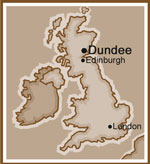
    Using the vibrant university city of Dundee as our home base, join us for a week of writing, and exploring this beautiful country. We'll go beyond the typical tourist path and get to know the REAL Scotland. The retreat will feature supportive workshops, readings by local writers, and excursions to Edinburgh, castles, and more. Led by Peter Murphy.

    Get away from the grind to write and be inspired. Using Dundee as your home base, you will spend a week writing, relaxing, and exploring this beautiful country, heading beyond the well-worn tourist path, and getting to know the real Scotland. Dundee, a university city of 150,000, bustles with Scottish arts and culture, set alongside a centuries-old seafaring community and 12th-century history.


    LEARN MORE AND REGISTER TODAY